

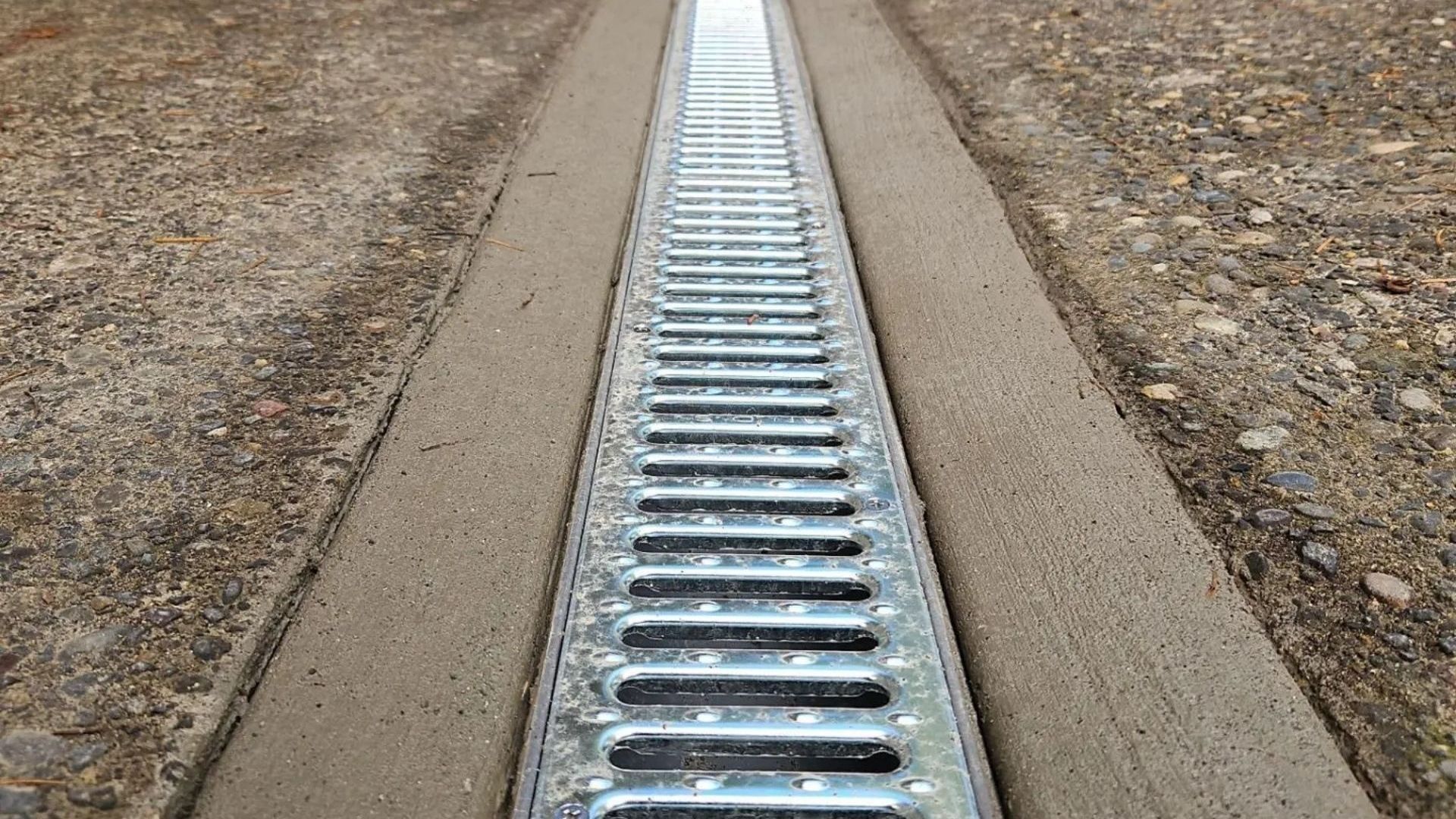
Quick Answer: French drains protect Texas foundations by intercepting storm runoff and shallow groundwater before it reaches the foundation. Water gets routed through a perforated pipe in a gravel-filled trench to a safe discharge point. In San Antonio's expansive clay soil, that matters more than in most places. Saturated clay swells hard against a slab or pier.
The same clay shrinks and pulls away once it dries out. A properly sloped French drain, built to at least a 1 percent grade, keeps water moving away from the foundation instead of cycling through that swell-and-shrink pattern underneath it.
Why Storm Runoff Is a Foundation Problem Here, Not Just a Yard Problem
San Antonio sits inside what meteorologists and locals both call Flash Flood Alley. Shallow soil over limestone bedrock doesn't absorb water well, so heavy storms turn into fast runoff and quickly rising creeks instead of soaking in gradually. That same terrain sits under most residential lots in the area.
Underneath a lot of that terrain is expansive clay, technically classified as vertisols in the Bexar County Soil Survey. This soil has a high shrink-swell potential. It takes on water and expands, then dries out and contracts. San Antonio's swing between drought and downpour keeps that cycle running most of the year. Every expansion pushes against whatever sits above it. Every contraction pulls away and leaves a gap that the next storm fills again. A foundation sitting on top of that cycle takes the stress from both directions, whether it's a slab or a pier-and-beam system.
Storm runoff is the thing that starts the cycle. Water that pools against a foundation instead of draining away saturates the clay directly beneath it first, which is exactly the spot you don't want swelling unevenly. A French drain doesn't change the soil. It changes where the water goes before the soil ever gets the chance to react to it.
How a French Drain Actually Works
The concept is simple even though the execution isn't. A trench is dug along the path water needs to travel. A perforated pipe goes down inside a bed of clean gravel, and the whole system is sloped so gravity carries water toward a discharge point instead of letting it sit. Water enters through the perforations and moves through the pipe. It exits somewhere that isn't up against your house: a catch basin, a pop-up emitter, or a lower section of yard designed to handle it.
The slope is what makes or breaks the system. Every French drain we install carries a minimum 1 percent grade along its full run. A flat or reverse-sloped drain just becomes an underground puddle instead of a channel. Get that detail wrong and the drain looks installed but doesn't actually function.
The Three French Drain Types We Install
Not every property needs the same setup, and the type depends on where the water problem actually is.
Exterior French drains run around the foundation perimeter or through problem areas of the yard. This is the most common type for residential properties. It's built to intercept surface water and shallow groundwater before either one reaches the foundation or ruins the landscaping around it.
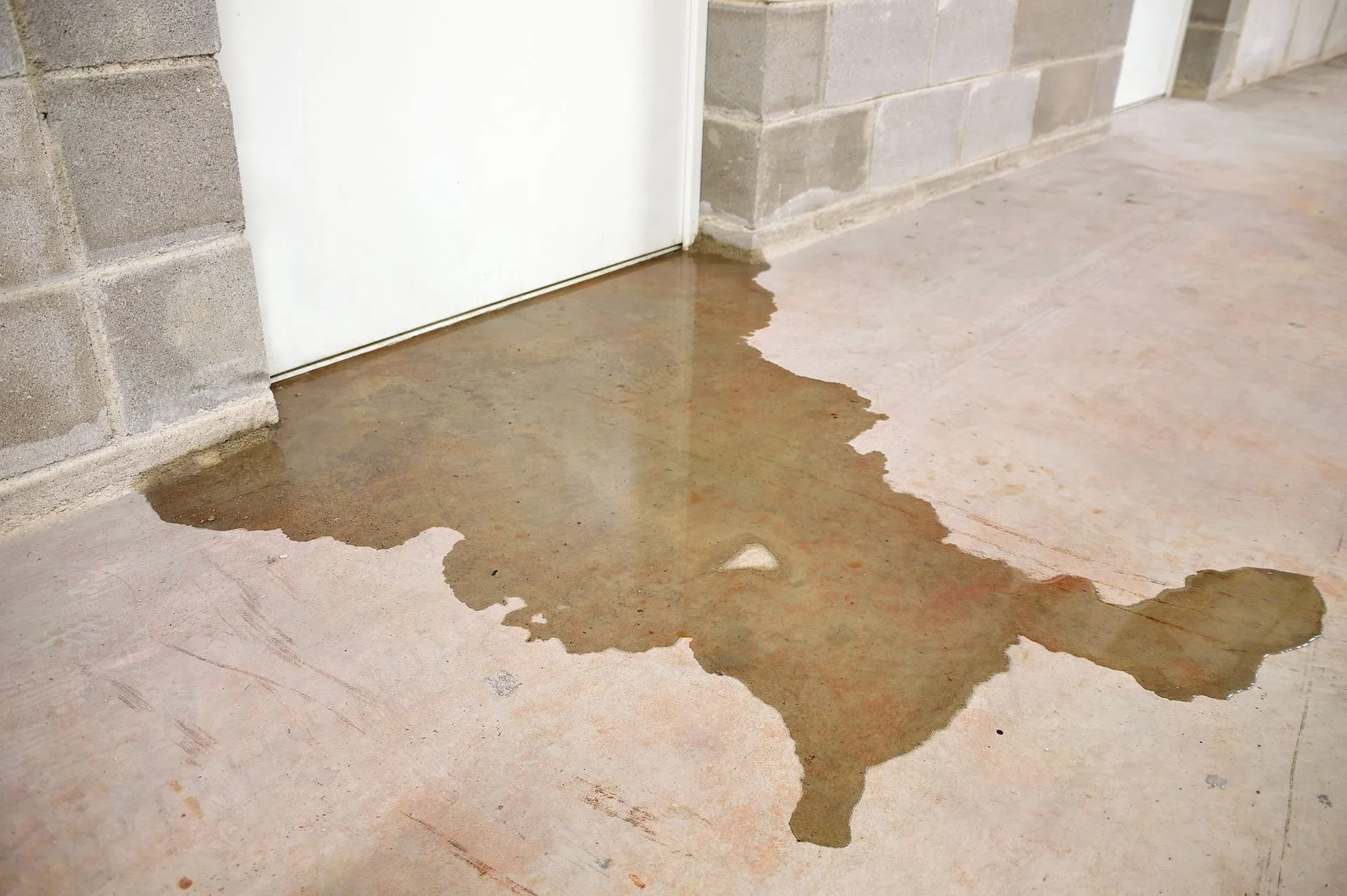
Basement French drains go inside, along the interior perimeter of a basement, and catch water that's already seeping through the foundation wall. These typically route to a sump pump, which pushes the collected water back out and away from the house.
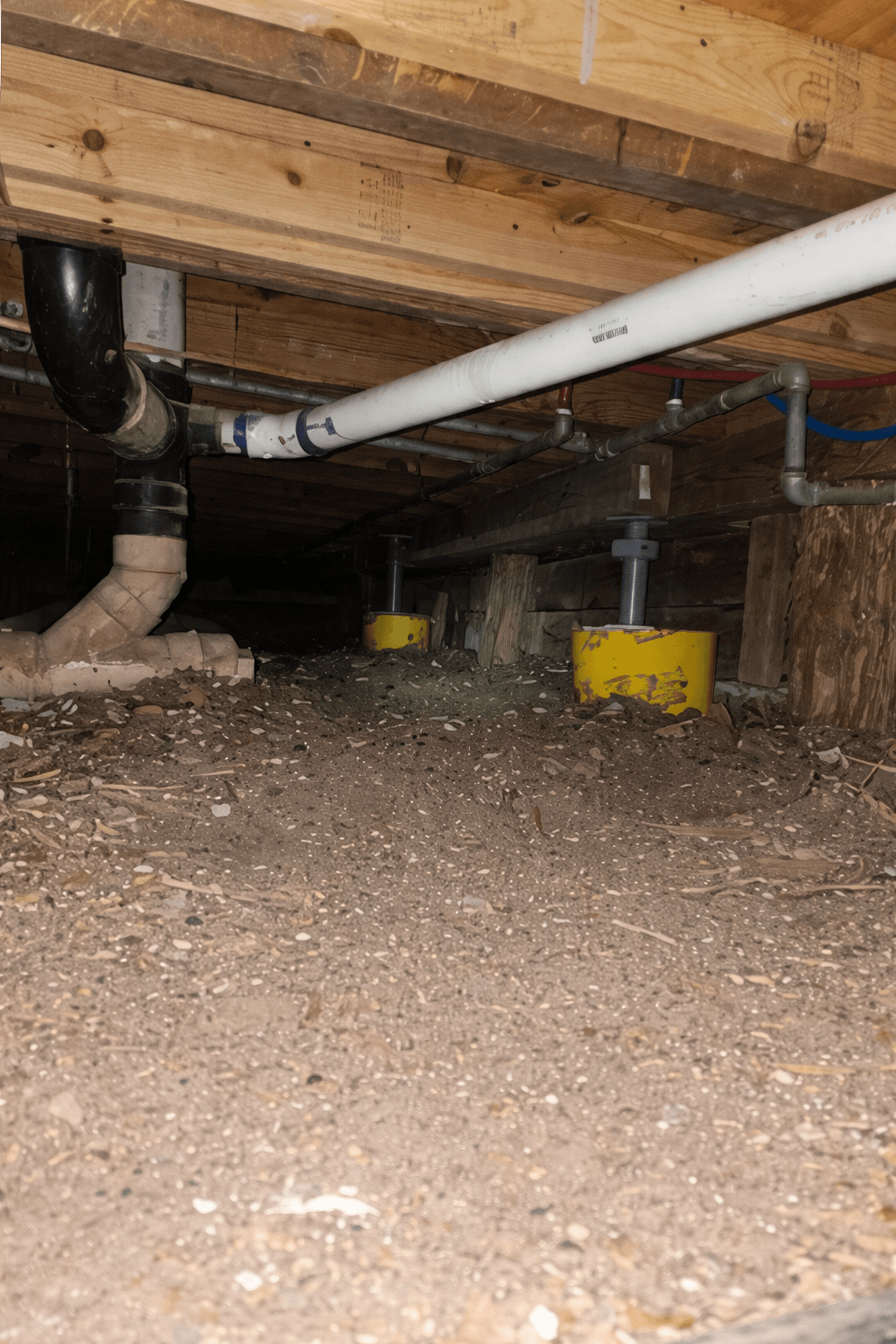
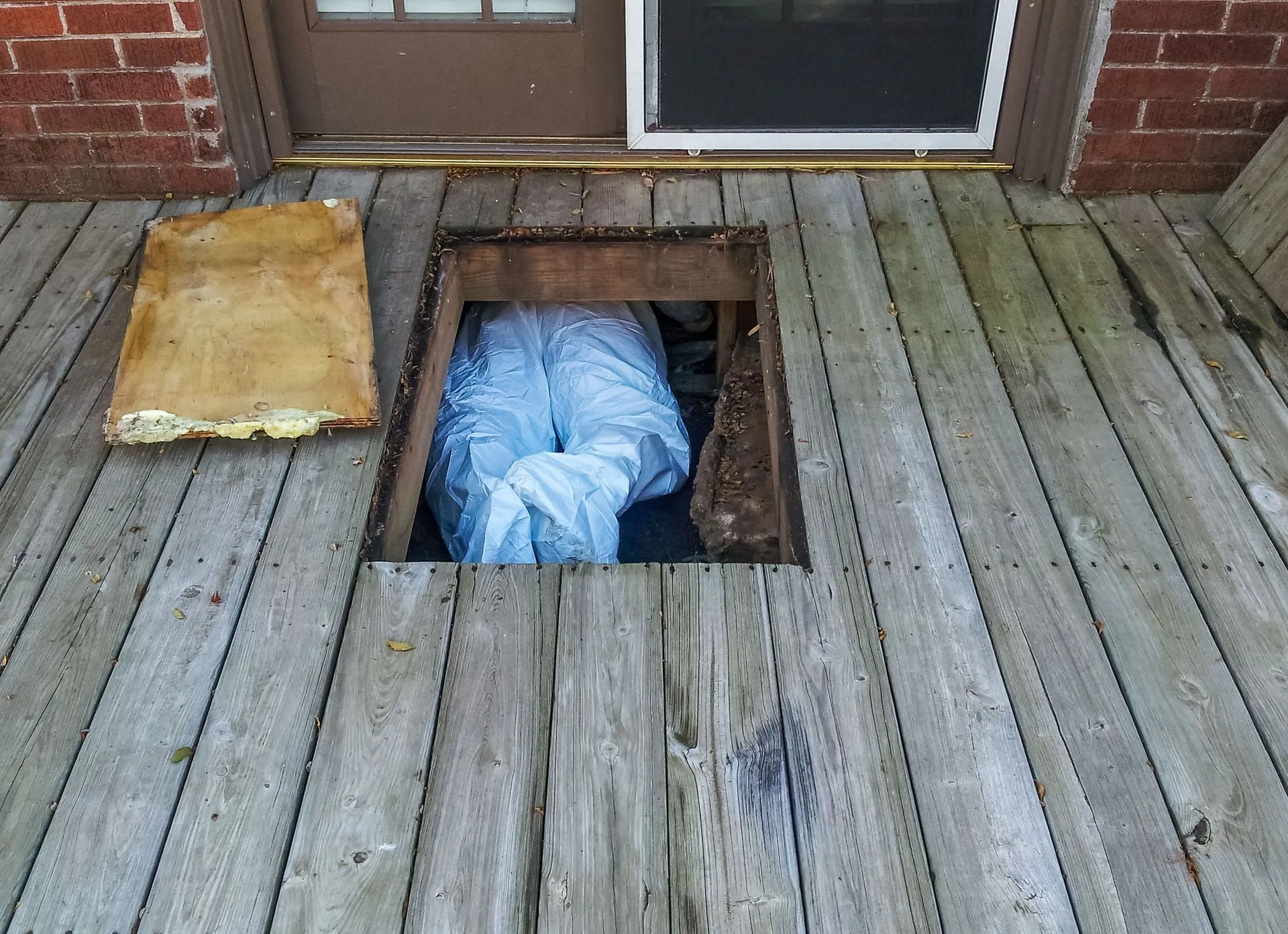
Post-and-pier French drains handle a foundation type most other states don't build on nearly as often. These drains keep the crawl space under a pier-and-beam home dry by intercepting groundwater before it pools. That prevents the moisture that leads to mold, wood rot, or a deteriorating support structure. This is a version of our Post & Pier Repair work built specifically around drainage.
Some properties need a combination rather than just one type, especially when surface runoff and a foundation moisture problem are happening at the same time from two different directions.
What Goes Into a Proper Installation
The specifics change based on which type is being installed, but the standards don't move.
For an exterior French drain, trenches typically run 12 to 18 inches deep and about 9 inches wide, with underground utilities located and marked before any digging starts. A base layer of clean river rock goes in first, then a perforated sock pipe or triple-wall pipe, connected to a catch basin or pop-up emitter at the discharge point.
For a basement French drain, the process involves removing a section of the existing concrete slab, usually about 10 inches out from the foundation wall. Crews then excavate 4 to 6 inches below the footing. A drainage mat goes against the foundation wall to guide water into the system, and a vapor barrier covers the rock and mat. The concrete gets repoured to match the original slab once everything is tested and working.
Most residential installations, of either type, are completed in one to two days. The bigger time investment goes into the assessment beforehand. Identifying where water is actually coming from and where it needs to go matters, since a French drain routed to the wrong discharge point solves nothing. Full details on the process are on our French Drain Installation page.
Signs Your Property Might Need One
A few patterns show up consistently in San Antonio-area homes before a drainage problem becomes a foundation problem:
- A low spot in the yard that turns into standing water after every rain
- Water pooling against the foundation instead of draining away from it
- Soggy, soft ground near the house that stays wet for days after a storm
- Doors or windows that started sticking, or new cracks, following a heavy rain event
Any one of these on its own might be minor. Several together, especially after storm season, are worth a proper look before the clay underneath starts moving.
What's Warrantied
Foundation and drainage work at Foundations First carries different warranty terms depending on the specific repair, not one blanket number for everything we touch:
| Repair | Warranty |
|---|---|
| Helical Piles | Lifetime |
| Grouted Micropiles | Lifetime |
| Invisibeam | Lifetime |
| Waterproofing | Limited Lifetime* |
| Steel Adjustable Posts | 20 Years |
| Carbon Fiber Reinforcement | 20 Years |
| Steel Wall Braces | 20 Years |
| Deadman Wall Braces | 20 Years |
| Stem Wall Repairs | 20 Years |
| Shotcrete | 20 Years |
| Slab Repairs | 2 Years |
| Workmanship Warranty | Included on qualifying repairs |
*Sump pumps carry the manufacturer's 3-year warranty rather than our own term. All warranties are transferable to a future homeowner, and they apply as long as the associated invoice is paid in full. We'll walk through exactly what applies to your project during your no-cost estimate.
Getting a Straight Answer for Your Property
Every yard drains differently, and a phone call can't tell you where your water is actually coming from or where it needs to go. We assess your specific property and tell you honestly whether a French drain is the right fix, or whether something simpler solves it. You get a no-cost estimate before any work begins.
We serve San Antonio, Kerrville, Boerne, New Braunfels, Marion, Seguin, and the surrounding Hill Country, and we offer financing for homeowners who'd rather not pay the full cost upfront. If storm runoff keeps finding its way toward your foundation, a straight answer is one call away.
Frequently Asked Questions
Does a French drain stop foundation movement caused by clay soil? Not directly, but it removes the trigger. Expansive clay moves because of moisture swings, and a French drain keeps storm runoff from saturating the soil right against your foundation. Less water pooling there means less uneven swelling in the exact spot that causes movement.
How long does French drain installation take in San Antonio? Most residential installations, whether exterior, basement, or post-and-pier, are completed in one to two days. The property assessment and design happen before that, and site cleanup and testing happen after.
What's the difference between an exterior and a basement French drain? An exterior French drain runs outside, around the foundation perimeter or through problem areas of the yard, intercepting water before it reaches the house. A basement French drain runs inside, along the interior wall, catching water that's already seeping through and routing it to a sump pump.
Do French drains work with pier-and-beam foundations? Yes. A post-and-pier French drain keeps the crawl space under a pier-and-beam home dry by intercepting groundwater before it pools. That prevents the mold, wood rot, and support deterioration that damp crawl spaces cause over time.
Is French drain installation covered by warranty? Yes, as a workmanship warranty on qualifying installations. If the project also includes waterproofing components, those carry a separate limited lifetime warranty, and any sump pump involved carries the manufacturer's 3-year warranty.
Key Takeaways
- French drains protect foundations by routing storm runoff and shallow groundwater away through a sloped, gravel-filled trench before the water reaches the foundation.
- San Antonio sits within Flash Flood Alley, where shallow soil over limestone bedrock limits absorption and turns heavy storms into fast runoff.
- Expansive clay soil in the San Antonio area, classified as vertisols in the Bexar County Soil Survey, swells when saturated and shrinks when dry, stressing foundations from both directions.
- A functioning French drain requires a minimum 1 percent grade along its full run; a flat or reverse-sloped drain won't move water.
- Exterior French drains protect the yard and foundation perimeter; basement French drains route interior seepage to a sump pump; post-and-pier French drains keep pier-and-beam crawl spaces dry.
- Exterior French drain trenches typically run 12 to 18 inches deep and about 9 inches wide; most residential installations take 1 to 2 days.
- French drain installation carries a workmanship warranty on qualifying work, and any related waterproofing carries a separate limited lifetime warranty.

0 Comments